Alright, let’s talk about something incredibly vital for our future: the world of agriculture. It’s no longer just about planting seeds and harvesting crops; it’s a dynamic, high-tech industry at the forefront of global change.
Frankly, I’ve seen firsthand how rapidly things are shifting, from climate-smart farming techniques to the incredible leap forward in agritech and digital tools.
We’re witnessing a complete transformation, and honestly, it’s thrilling to be a part of it. For anyone looking to truly make an impact in this essential sector, or even those already deeply rooted in it, understanding the business side is absolutely non-negotiable.
Traditional methods simply won’t cut it in an era defined by precision agriculture, complex supply chains, and the pressing need for sustainable practices.
That’s where a solid qualification in agricultural business management becomes an absolute game-changer. It’s not just about earning a piece of paper; it’s about equipping yourself with the financial savvy, strategic mindset, and technological know-how to navigate and thrive in this evolving landscape.
I often hear people asking how to stay ahead, how to optimize their operations, and how to truly future-proof their careers in agriculture. From my perspective, it all comes down to having a robust understanding of the modern curriculum that empowers these essential skills.
The truth is, many existing agricultural education programs sometimes struggle to keep pace with these rapid advancements, leaving a gap between classroom theory and real-world application.
That’s why diving deep into what a truly effective agricultural business management qualification offers is so critical right now. It means understanding everything from cutting-edge data analytics for crop optimization to innovative marketing strategies for sustainable produce, and even mastering financial planning for unpredictable markets.
It’s a comprehensive approach that transforms passion into profitable, sustainable ventures. If you’re ready to explore how to master these modern challenges and opportunities, let’s dive in and truly unpack what makes for an exceptional educational journey in agricultural business management.
Below, we’ll thoroughly explore the curriculum that’s truly designed for success in today’s agricultural world.
Mastering the Modern Agricultural Landscape with Strategic Acumen
Sharpening Your Economic Edge in Farming
Honestly, when I first started looking at the agricultural sector, I thought it was all about getting your hands dirty – and don’t get me wrong, that’s a huge part of it!
But what I’ve quickly come to realize, and what’s become crystal clear through countless conversations with folks in the field, is that it’s also a high-stakes business game.
You’re dealing with volatile markets, unpredictable weather patterns, and an ever-changing regulatory environment. It’s like playing chess, but with Mother Nature throwing curveballs at you constantly!
That’s why having a rock-solid grasp of economic principles tailored specifically for agriculture isn’t just a nice-to-have; it’s absolutely essential.
Think about it: understanding market demand, commodity pricing, and even global trade policies can literally make or break your operation. I’ve seen some incredibly passionate farmers struggle simply because they lacked the business foresight to adapt to these shifts.
A strong curriculum dives deep into these economic forces, teaching you how to analyze trends, forecast outcomes, and make smart, data-driven decisions that protect your bottom line.
It’s about more than just numbers; it’s about understanding the pulse of the market and positioning yourself for success, no matter what comes your way.
Strategic Planning for Long-Term Growth
Planning for the next season is one thing, but planning for the next decade? That’s where agricultural business management truly shines. From my own observations, many operations, especially smaller family farms, often get caught in a reactive cycle.
They respond to immediate challenges rather than proactively shaping their future. This is where a strategic mindset becomes invaluable. We’re talking about developing long-term visions, setting ambitious yet achievable goals, and then meticulously crafting the pathways to get there.
It’s about evaluating potential growth areas – maybe diversifying into specialty crops, investing in new technology, or exploring direct-to-consumer models.
I’ve often thought about how much more stable and profitable farms could be if they consistently engaged in this kind of forward-thinking strategy. An effective qualification teaches you how to conduct thorough SWOT analyses, develop comprehensive business plans, and even manage the succession planning process, which is so critical for family-run businesses.
It’s not just about surviving; it’s about building a legacy that thrives for generations.
Embracing Innovation: The Digital Revolution in Agriculture
Leveraging Agritech for Enhanced Productivity
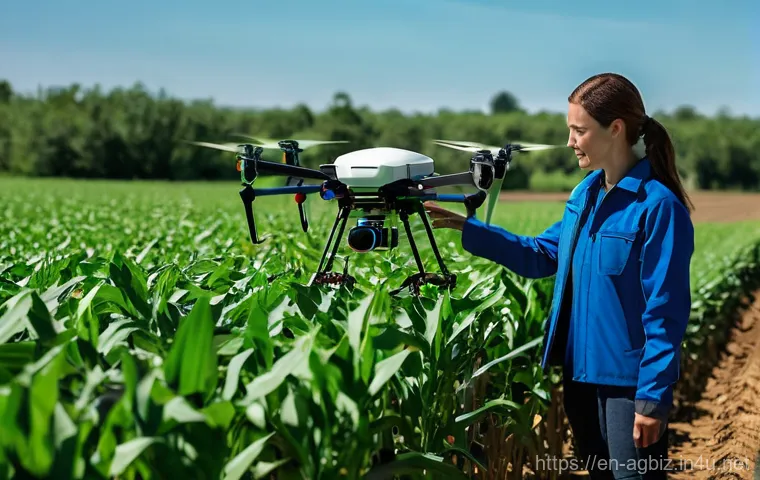
When I tell people about the incredible advancements happening in agritech, their jaws often drop. We’re far beyond just tractors and plows; we’re talking about a landscape transformed by drones, AI, IoT sensors, and robotic systems.
Seriously, it’s mind-blowing! I’ve had the chance to speak with farmers who are using precision agriculture tools to monitor crop health down to individual plants, optimize irrigation based on real-time weather data, and even automate harvesting processes.
The efficiency gains are astounding, not to mention the reduction in waste. Learning about these technologies isn’t just about understanding the gadgets; it’s about grasping how to integrate them into your existing operations to maximize yield and minimize costs.
From my vantage point, anyone entering or advancing in agriculture today *has* to be fluent in these digital languages. It’s the new frontier, and those who master it will undeniably lead the way.
Data-Driven Decision Making on the Farm
If there’s one thing I’ve learned about running any successful enterprise, it’s that data is king. And in agriculture, the sheer volume of data we can now collect is incredible.
Soil moisture levels, nutrient content, pest infestations, yield maps, equipment performance – it’s all there, waiting to be analyzed. But collecting data is just the first step; knowing how to interpret it and turn it into actionable insights is where the real magic happens.
I’ve seen operations transform simply by shifting from gut-feel decisions to data-backed strategies. For instance, using analytics to determine the optimal planting times, fertilizer application rates, or even predicting market fluctuations.
An agricultural business management program that truly prepares you for the modern world will emphasize data science, teaching you statistical analysis, machine learning applications, and how to use various software platforms to visualize and understand complex datasets.
It’s about empowering you to see the hidden patterns and make smarter, more profitable choices.
Cultivating a Greener Future: Sustainable Practices and Environmental Stewardship
Integrating Eco-Friendly Farm Management
Let’s be real: sustainability isn’t just a buzzword anymore; it’s a fundamental requirement for the future of agriculture. From my personal experience and countless conversations with consumers and industry leaders alike, there’s a growing demand for responsibly produced food.
People care about where their food comes from and how it impacts the planet. This means farmers aren’t just food producers; they’re environmental stewards.
Modern agricultural business management programs absolutely must emphasize eco-friendly practices. We’re talking about techniques like regenerative agriculture, reduced tillage, crop rotation, integrated pest management, and efficient water usage.
It’s not just about doing good; it’s about smart business. Practices that enhance soil health, conserve water, and reduce chemical inputs often lead to long-term cost savings and increased resilience against climate change.
I believe that integrating these methods isn’t just about compliance; it’s about building a brand that resonates with today’s environmentally conscious consumers.
Navigating Regulations and Certification
The world of environmental regulations can feel like a labyrinth, I know! It’s one of those areas where you really need to be on top of your game to avoid costly mistakes.
From local zoning laws to national environmental protection acts and international trade agreements, the rules and requirements for sustainable farming are constantly evolving.
And then there are all the different certifications – organic, fair trade, carbon neutral – each with its own set of standards and auditing processes.
It can be overwhelming! A comprehensive qualification in agricultural business management will equip you with the knowledge to understand and comply with these regulations, helping you navigate the complexities without a hitch.
More importantly, it teaches you how to strategically leverage certifications as a competitive advantage, opening up new markets and commanding premium prices for your sustainably produced goods.
It’s about turning potential hurdles into opportunities.
Financial Fortitude: Mastering Agricultural Finance and Risk Management
Strategic Financial Planning for Agricultural Ventures
I’ve learned that even the most innovative farming techniques can falter without a solid financial foundation. Agriculture, perhaps more than many other industries, is susceptible to an array of financial risks – commodity price swings, unexpected weather events, disease outbreaks, and shifts in consumer demand.
That’s why financial planning in this sector isn’t just about balancing the books; it’s about building resilience. A truly effective agricultural business management program will immerse you in topics like capital budgeting, investment analysis, cash flow management, and understanding financial statements specific to agriculture.
I recall one conversation with a seasoned farmer who told me that his ability to secure favorable loans and manage his debt strategically was just as important as the quality of his harvest.
It’s about knowing how to allocate resources wisely, identifying potential funding opportunities, and making sure your operation remains solvent and profitable, year after year, even when Mother Nature isn’t cooperating.
Mitigating Risks in an Unpredictable Industry
Risk management in agriculture is, frankly, a continuous tightrope walk. You’re constantly facing variables that are largely out of your control. From my perspective, however, what you *can* control is how you prepare for and react to those risks.
This is where a strong understanding of risk assessment and mitigation strategies becomes absolutely vital. Think about crop insurance, forward contracting, diversification of crops or livestock, or even hedging strategies in commodity markets.
These aren’t just abstract concepts; they’re practical tools that can literally save your business. I’ve heard too many stories of operations being wiped out by a single catastrophic event that could have been cushioned by proper risk planning.
An advanced curriculum provides you with the frameworks to identify potential threats, evaluate their impact, and develop robust contingency plans. It’s about building a safety net that allows you to weather the storms and emerge stronger, securing the future of your agricultural enterprise.
Navigating the Global Agri-Food Supply Chain and Market Access
Optimizing Logistics and Supply Chain Efficiency
Honestly, the journey of food from farm to fork is way more complex than most people realize. It’s a massive global ballet of logistics, storage, processing, and transportation.
And from what I’ve seen, inefficiencies in this chain can seriously eat into profits and even compromise product quality. This is especially true for fresh produce or perishable goods.
A modern agricultural business management qualification goes deep into supply chain management, teaching you about inventory control, cold chain logistics, transportation optimization, and even the role of technology in tracking products from origin to destination.
I once talked to a small organic farmer who completely transformed his business by finding a more efficient way to get his produce to urban markets, dramatically reducing spoilage and increasing his revenue.
It’s about streamlining those processes, ensuring your products reach consumers efficiently and at their peak quality.
Unlocking New Markets and Consumer Trends
The world is your oyster when it comes to agricultural products, but you’ve got to know how to shuck it! Identifying new markets, both domestically and internationally, can be a huge growth driver.
It’s not just about selling; it’s about understanding who wants your product, how they want it, and what price they’re willing to pay. This means diving into market research, understanding consumer demographics, and spotting emerging trends – like the growing demand for plant-based alternatives or sustainably sourced ingredients.
I’ve witnessed firsthand how a farm diversified its offerings based on an emerging market trend and saw incredible success. A comprehensive program will teach you how to develop effective marketing strategies, understand international trade regulations, and even navigate cultural nuances to successfully introduce your products to new audiences.
| Core Area | Key Skills Acquired | Real-World Application |
|---|---|---|
| Agricultural Economics | Market Analysis, Commodity Trading, Price Forecasting | Optimizing sales, hedging against market volatility |
| Agritech Integration | Precision Farming, Data Analytics, IoT Management | Improving yields, reducing resource waste, automation |
| Sustainable Practices | Regenerative Agriculture, Environmental Compliance, Certification Management | Enhancing soil health, meeting consumer demand for eco-friendly products |
| Financial Management | Budgeting, Investment Analysis, Risk Mitigation | Securing funding, ensuring long-term profitability, managing debt |
| Supply Chain & Marketing | Logistics Optimization, Market Research, Branding | Efficient product distribution, expanding customer base, brand development |
Building a Future-Proof Career in the Dynamic Agri-Food Sector
Diverse Career Pathways in Modern Agriculture
When I tell people about the sheer diversity of careers available in modern agriculture, they’re often surprised! It’s no longer just about being a farmer (though that’s an incredibly vital role, of course).
An agricultural business management qualification opens up so many doors. We’re talking about roles in agribusiness consulting, commodity trading, supply chain management, agricultural finance, food marketing, environmental policy, agritech development, and even international development.
I’ve seen graduates go on to manage large corporate farms, start their own innovative agritech startups, advise governments on food security, or lead sustainability initiatives for major food brands.
The breadth of opportunity is truly incredible, and it’s growing every day as the industry evolves. It’s about understanding the entire ecosystem and finding your niche where you can make the biggest impact.
Continuous Learning and Industry Adaptation
The truth is, the world of agriculture is always moving forward, and if you stand still, you’ll quickly be left behind. From my vantage point, and after talking to so many incredible people in this space, continuous learning isn’t just a recommendation; it’s a necessity.
New technologies emerge, consumer preferences shift, climate patterns change, and global markets constantly reconfigure. A strong educational background in agricultural business management instills that foundational understanding, but it also fosters a mindset of lifelong learning and adaptability.
It teaches you how to critically assess new information, embrace emerging technologies, and pivot your strategies as needed. It’s about being proactive, not reactive, and ensuring that your skills and knowledge remain relevant and valuable throughout your entire career.
That ongoing curiosity and willingness to evolve? That’s what truly future-proofs you in this dynamic industry.
Wrapping Things Up
Phew! We’ve covered a lot of ground today, haven’t we? It’s truly eye-opening to see how much the agricultural landscape has evolved, moving far beyond traditional farming into a realm of intricate economic strategies, cutting-edge technology, and profound environmental responsibility. What I truly hope you take away from this is that success in today’s agri-food sector isn’t just about hard work in the fields; it’s about smart work in the office, in the lab, and out in the global marketplace. It’s about cultivating not just crops, but also your knowledge, your network, and your strategic thinking. Embracing these multifaceted aspects is how you truly thrive and build a lasting legacy in this vital industry.
Handy Tips You’ll Wish You Knew Sooner
1. Network Like Crazy: Seriously, go to those local farm conferences, join online forums, and connect with other producers. I’ve found that some of the best insights and opportunities come from simply chatting with folks who are facing similar challenges or have innovative solutions. You never know who you’ll meet or what amazing idea you’ll stumble upon that could revolutionize your operation.
2. Become a Data Whisperer: Start tracking everything you can – yield per acre, input costs, weather patterns, market prices, equipment maintenance. Then, learn how to analyze it. There are so many user-friendly tools out there now. Moving from gut feelings to data-driven decisions is a game-changer; it helps you spot trends, optimize resources, and make smarter financial moves.
3. Embrace the “Why”: In today’s market, consumers aren’t just buying a product; they’re buying into a story. Be clear about your farm’s values, your sustainable practices, or what makes your product unique. Share your “why” through your branding and marketing. I’ve personally seen how a compelling narrative can connect with customers on a deeper level and build incredible loyalty.
4. Future-Proof Your Skills: The industry is changing at warp speed! Dedicate time each year to learning about new agritech, financial strategies, or environmental regulations. Online courses, workshops, and even industry podcasts can keep you ahead of the curve. Staying updated isn’t optional; it’s essential for staying competitive.
5. Diversify for Resilience: Don’t put all your eggs in one basket, as they say! Explore different revenue streams, whether it’s diversifying your crops, adding livestock, offering agritourism, or even venturing into direct-to-consumer sales. From my experience, a diverse portfolio acts as a fantastic buffer against market volatility or unexpected challenges in a single area.
Key Takeaways
To truly master the modern agricultural landscape, it boils down to a few critical pillars. First, a deep understanding of agricultural economics and strategic business planning is non-negotiable. You need to be a savvy business person, constantly analyzing market dynamics and forecasting for the long haul. Second, embracing technological innovation, from precision agriculture to data analytics, is no longer a luxury but a necessity for enhancing productivity and making informed decisions. Those who integrate agritech effectively will undoubtedly lead the charge.
Third, sustainability isn’t just a trend; it’s the foundation of future farming. Prioritizing eco-friendly practices and diligently navigating environmental regulations are crucial for both ethical responsibility and market advantage. Consumers are increasingly demanding transparency and sustainable sourcing, so aligning with these values is paramount. Finally, robust financial management and proactive risk mitigation strategies are absolutely vital. The agri-food sector is inherently unpredictable, and having a strong financial foundation, coupled with comprehensive plans to weather unforeseen challenges, ensures the long-term viability and growth of your enterprise. It’s about combining passion with shrewd business acumen to cultivate a thriving and resilient future.
Frequently Asked Questions (FAQ) 📖
Q: Why is an
A: gricultural Business Management qualification so essential in today’s farming world, especially when traditional farming knowledge seems to have worked for generations?
A1: Oh, trust me, I get this question all the time! It’s completely understandable to wonder, especially with generations of knowledge in our pockets.
But here’s the thing: the agricultural landscape is changing at a breathtaking pace, faster than ever before. What worked beautifully for our grandparents simply won’t cut it in an era defined by unpredictable climate patterns, global supply chain complexities, and the constant pressure for sustainable practices.
A modern Agricultural Business Management qualification isn’t just about tweaking old methods; it’s about equipping you with the strategic mindset and cutting-edge tools to navigate these new challenges.
Think about it: we’re talking about managing risks like never before, understanding complex market dynamics, and leveraging technology that didn’t even exist a decade ago.
It’s no longer enough to just know how to grow a crop; you need to know how to run a sophisticated, resilient, and profitable enterprise, and that’s exactly what this qualification delivers.
From my perspective, it’s about future-proofing not just a farm, but an entire career.
Q: What exactly does a modern
A: gribusiness Management curriculum cover? Is it just more finance and marketing, or is there something truly revolutionary included? A2: That’s a fantastic question, and honestly, it’s where many people are pleasantly surprised!
While, yes, a robust understanding of finance and marketing is absolutely foundational – because, let’s face it, agriculture is a business – the modern curriculum goes so much deeper.
We’re talking about genuinely revolutionary stuff. Imagine diving into precision agriculture techniques, where you learn how to use data analytics and IoT devices to optimize crop yields and minimize waste, or mastering supply chain logistics to ensure your products reach the market efficiently and profitably.
It’s also heavily focused on sustainability practices, understanding carbon credits, and even navigating international trade policies. From my experience, it’s about developing a holistic understanding of how to integrate cutting-edge technology with sound business principles, turning challenges into incredible opportunities.
It’s truly a blend of science, technology, and strategic business acumen.
Q: I’m already a farmer (or working in agriculture). How would pursuing this qualification directly benefit my current operation or career path? Is it worth the investment?
A: If you’re already hands-on in agriculture, then this qualification is, in my opinion, an absolute game-changer and a smart investment. I’ve seen firsthand how folks who’ve embraced this kind of advanced learning have transformed their operations.
Think about it: you’re already doing the hard work, but imagine being able to pinpoint exactly where you can cut costs without sacrificing yield, or identifying new, lucrative markets for your produce using advanced marketing strategies.
This isn’t just theoretical; it’s about practical application. You’ll gain skills in financial planning that help you secure better loans, negotiate stronger contracts, and even pivot your operations to adapt to climate shifts.
For career paths, it opens doors to leadership roles, consulting, or even starting your own innovative agritech venture. It’s about leveraging your existing experience with powerful new tools and knowledge, giving you a competitive edge and allowing you to maximize your impact and profitability in a way traditional methods simply can’t anymore.
It’s about empowering you to make data-driven decisions that truly move the needle.